


[ad_1]
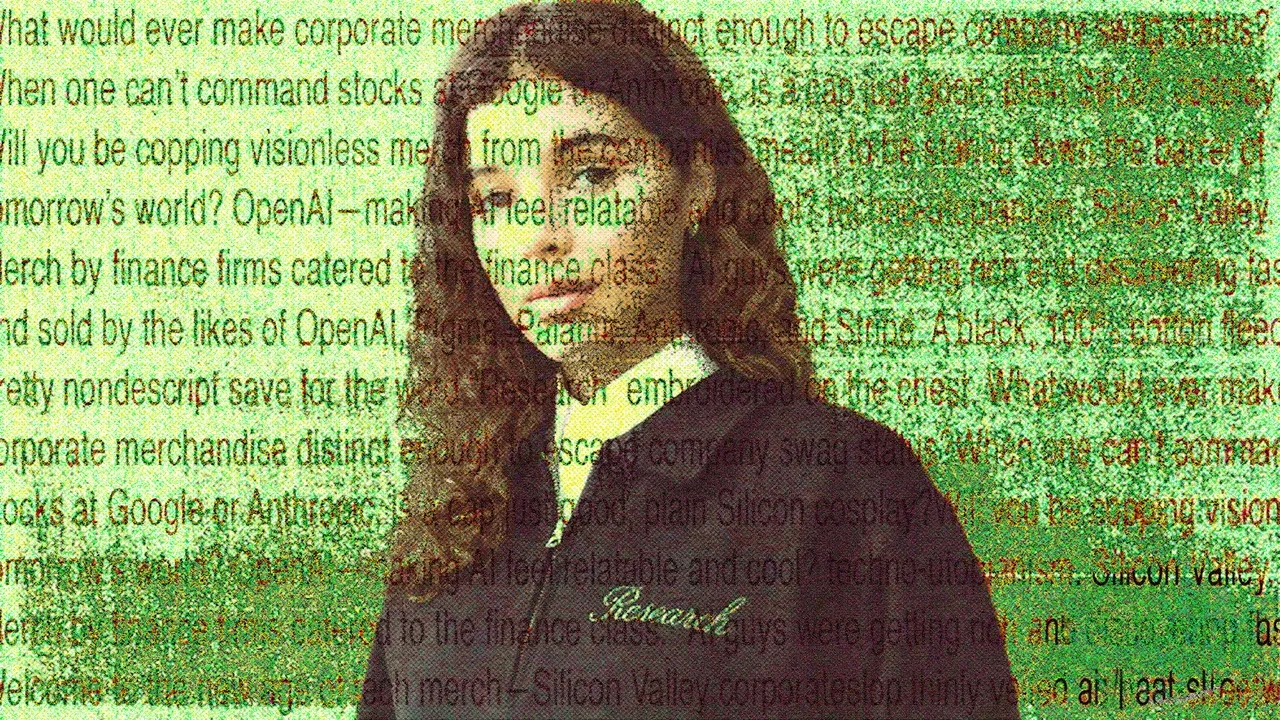
“Supply Co. began as a small line of merch for employees and almost immediately blew up. OpenAI-ers developed concerningly strong, excited opinions about collectible cards, blue folding chairs, and graphic hoodies as emerging currency,” reads Supply Co.’s About page. “Somewhere along our timeline, these objects evolved from being just ‘merch’ into material embodiments of company culture. The next phase of Supply Co. is much bigger than seasonal drops: it’s collaborations, experiments, and physical expressions of research energy.” This includes apparel, a “Bloop” tote, water bottles, socks, and an already out-of-stock basketball.
It is interesting that now is the time these once-cloaked titans of tech are seeking to telegraph taste and cultural relevancy through promotional garments. It’s a strategy, as much as their playbooks for political influence and claims on what the future looks like. Merch has served as a way to make power feel desirable, familiar, wearable. No shares, but how about a hoodie? Yet for companies supposedly engineering tomorrow, their aesthetic lexicon is surprisingly familiar: streetwear, workwear, old-school Americana.
“The color choices remind me massively of the early Outdoor Voices colour scheme. The whole get outside, ‘Doing Things’ aesthetic,” says Louis Cheslaw, editor and writer of the style Substack Wardrobe, “which tracks with how all the AI companies’s commercials are about people using the software while doing IRL activities. It’s a nice idea, but the awkward Meta AI glasses rollout shows how far there is to go there.”
“I’d laugh if the amount of ugly new product being put into the world wasn’t so wasteful,” Cheslaw adds.
“It’s ALD-coded [Aimé Leon Dore-coded] because that style of lookbook was widely adopted by brands at every price point,” says Chris Black, co-host of How Long Gone and founder of consultancy Done to Death Projects; he’s worked with brands from Thom Browne to New Balance and J.Crew. “The AI guys were getting rich and discovering fashion, so they think this is what it should look like. It’s easy to understand and easy to execute.” It’s all a reflection of how streetwear has much less to do with the “street” now than what’s percolating on Sand Hill Road, at the Sweetgreens around FiDi, and in LinkedIn comments.
Indeed, today’s tech bro uniform is part of a longer corporate lineage. Tony Wang, founder of Office of Applied Strategy (a hybrid consulting firm, think tank, and venture fund), has spent years researching corporate aesthetics, tracing how companies use objects—from jackets to tote bags, and desk accessories—to project a worldview beyond the confines of a simple brand, and what merch ventures like this could say about the wider market.
For Wang, the idea that corporate merchandise should aspire to be desirable isn’t new. Throughout the 1980s and ’90s, Wall Street’s biggest players produced an entire ecosystem of lifestyle goods for their employees: Goldman Sachs-branded L.L.Bean totes, desk clocks, picnic sets, and country-club-ready accessories. The merchandise reflected the life the industry imagined for itself. “Merch by finance firms catered to the finance class,” Wang explains. “Objects reflected their lifestyle aspirations—lunch meetings at the club, yachting.”
[ad_2]
Source link
