


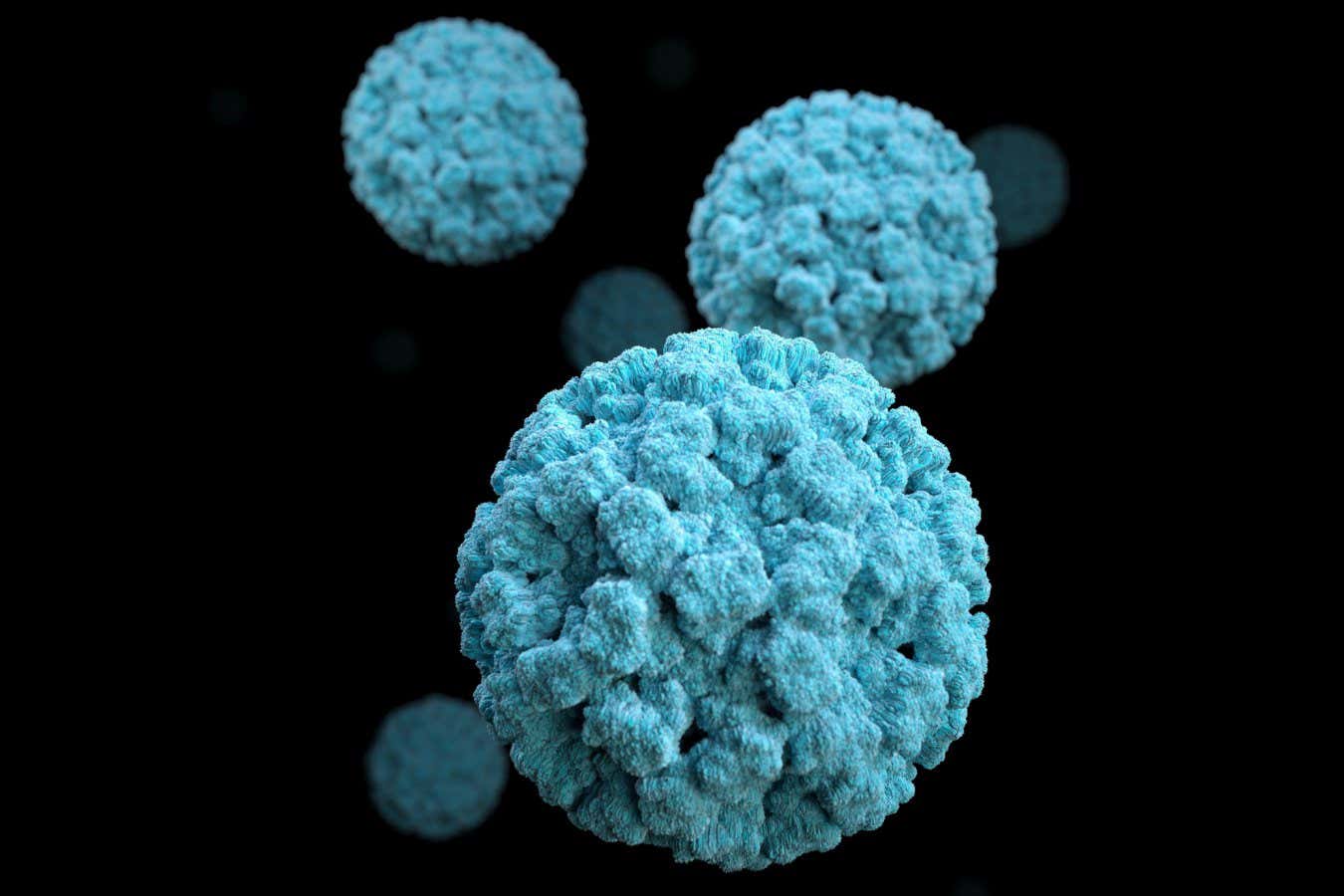

Illustration of the Norovirus parts
J Marshall/tribaleye images/alamy
A norovirus vaccine pill that reduces the risk of infection could be greedy in a few years, after it was promising in an essay where people were intentionally exposed to the virus.
The highly contagious virus infects the stomach and intestines, causing vomiting and daily that is usually resolved in a few days. “Millions are from the economy worldwide every year due to the lost days of work and hospitalization,” says Sarah Caddy of the University of Cornell on Ithaca, New York.
Sean Tucker of the Biotechnology Vaxart company in San Francisco and its colleagues previously developed an oral vaccine that increased the levels of IgA antibodies that can block the cell norovirus, suggestion that it could obtain infections.
Now, researchers have tried this in 141 people between 18 and 49 years old, approximately half of whom touch the pill, while the esters touch a placebo. A months later, all participants intentionally swallowed a high dose of the GI.1 strain of Norovirus in liquid form, while quarantine. “In the environment of the real world, it needs 10 to 100 viral particles to infect, and we use 1 million particles,” says Tucker. This helped ensure that enough people infected, he says.
In the following week, 82 percent of those of the placebo group were infected, but only 57 percent or the vaccinated participants did.
“I think most people would be interested in taking [the vaccine] If you can reduce your risk around [25 percentage points] And avoid obtaining real disappointed symptoms, “says Caddy, who was in the studio.
The team also discovered that vaccinated participants threw less viruses in their feces and vomit than those who took the placebo. This suggests that the vaccine could delay the spread of the virus, although that needs to be directly tested, says Caddy.
In another analysis, scientists confirmed that the probable works of the vaccine increase the levels of IgA protective antibodies in saliva and in the intestine, blood and nose.
However, it is not clear how much this protection would last. More work is also needed to verify the findings in young children and older adults, which are especially at risk of being hospitalized, says Caddy.
Most of the Norovirus that infect humans belong to two groups, known as GI and GII. Based on the unpublished work of your team, the GI vaccine.1 would probably protect against other very related GI variants, says Tucker. The team is also developing a vaccine that can protect against GI and GII viruses.
If everything goes well, Tucker hopes that the GI vaccine can be implemented in two or three years.
Topics:
]