


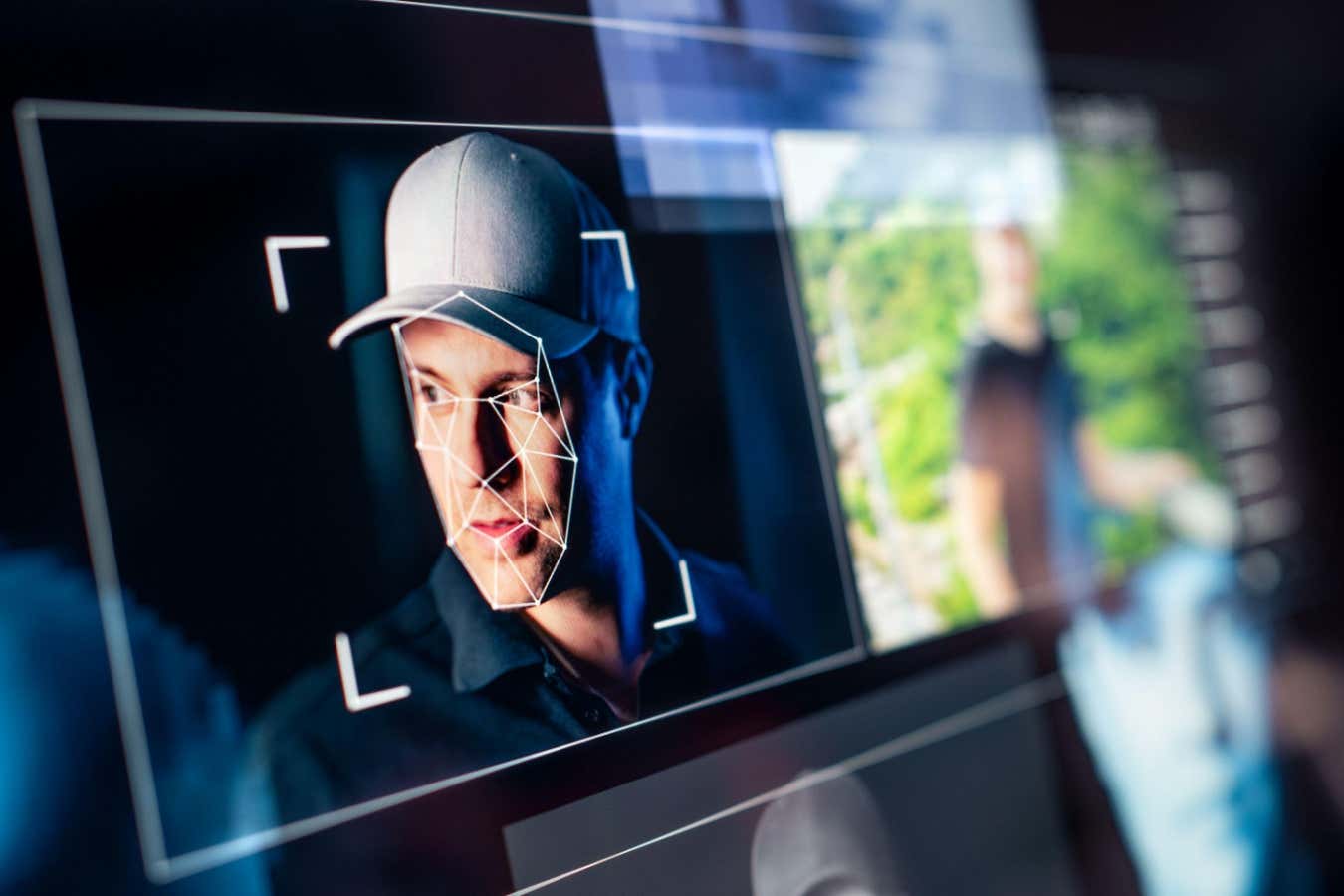

Some Deepfake videos have a convincing pulse
Alamy Stock Photo
Deepfake videos that have digital manipulations of people’s expressions and facial voices can also represent realistic heartbeat, which makes them more difficult to detect.
“Now we know that just because a person in a video has a measurable pulse, it does not mean that we can assume that they are real,” says Hany Farid, from the University of California, Berkeley, which was not a great plug in the investigation.
This development occurs as deep defects that have been digitally altered or generated by artificial intelligence are encouraging to celebrities and common people equally in convincing but false pornography, financial scams and political propaganda. Previously, the researchers had experienced with detecting deep defenders identifying changes in skin color related to blood flow and heart rate, but this research shows that some Deepfake videos may still have a passable pulse.
Peter Eisert at the Fraunhofer Telecommunications Institute in Germany and his colleagues developed a deep defaque detector that could analyze people’s pulses in genuine and deep videos. They also filmed a new set of genuine videos with facial expressions of a box of the people, while registering the heart frequencies of the participants so that they could verify the accuracy of its detector.
Then, the researchers inserted digitally altered faces in their genuine videos, a movement that should have alerted their Deepfake detector. Instead, they discovered that the detector received realistic pulses both in falsifications and in original videos.
“The fact that one or a few deep fake generators can reproduce this physiological signal does not mean that all Defake can generators can,” says Farid.
The team has already begun to experiment with new ways to detect deep heart attacks, such as identifying local blood flow patterns on people’s faces. But such methods can have a “limited useful life,” says Siwei Lyu of the University of Buffalo in New York, which did not participate in the work. That is the new generative tool of AI can more convincingly imitate the beats of the realistic heart and other physiological signals, and can be disseminated to extract a heart rate signal from low quality videos.
On the other hand, the most effective detection techniques try to identify more subtle differences between genuine and deep videos, such as the pixel brightness of the image, which are not “not intuitive to human spectators,” says Lyu.
Topics:
]