


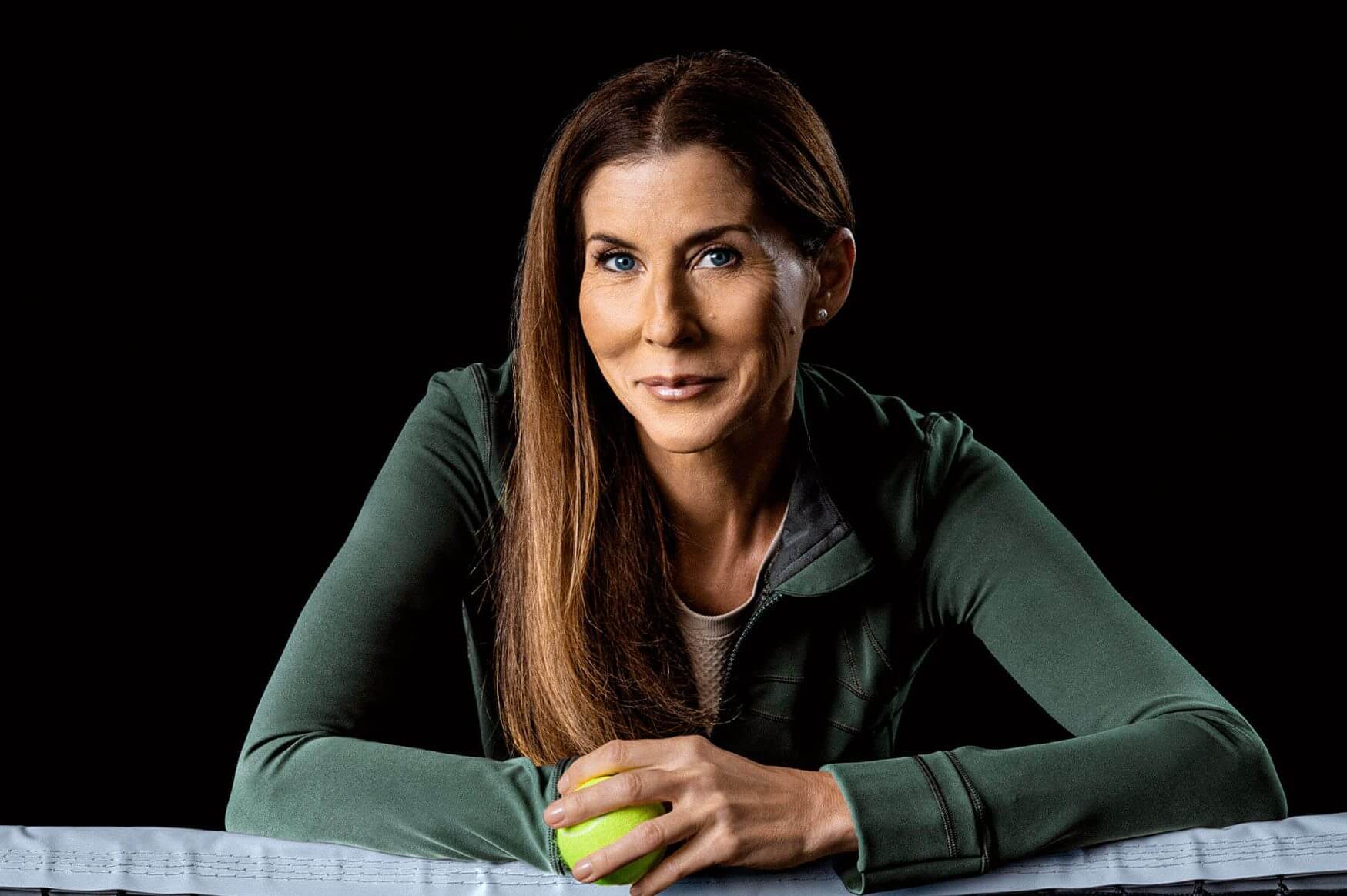
Early Life and Breakthrough
Monica Seles was born on December 2, 1973, in Novi Sad, Yugoslavia, into a family where tennis was more than just a sport it was a passionate pursuit. Her father first taught her to play when she was just five years old, and by age 11 she had already shown promise on the international junior stage. This early talent spurred her family’s move to the United States so she could train at the prestigious Nick Bollettieri Tennis Academy, where her game developed rapidly.
Seles turned professional at just 15 in 1989, and her meteoric rise was almost immediate. In 1990, she became the youngest French Open champion in history at age 16, a testament to her powerful two‑handed forehand and backhand as well as her fierce competitive spirit. By March 1991, she had claimed the No. 1 ranking in women’s tennis, making her the youngest player ever to sit atop the WTA rankings at just 17.
Dominance and Grand Slam Glory
Between 1990 and early 1993, Seles was a dominant force in the women’s game, winning an extraordinary eight Grand Slam singles titles while still a teenager and demonstrating a level of consistency rarely seen. Her aggressive style and physical play helped redefine the sport for a new generation.
She compiled an outstanding record of victories in this period, capturing titles at the Australian Open, French Open, and U.S. Open, and consistently challenging her fiercest competitors. Seles’s success not only elevated her status as a tennis superstar but also inspired countless young athletes worldwide.
Tragedy and Resilience
Just as her career reached its peak, Seles faced a life‑altering event in April 1993. During a match at the Hamburg Open, she was stabbed in the back by a deranged spectator, an incident that sent shockwaves through the tennis world. Though she was physically fortunate the blade missed vital organs the psychological impact was profound. Seles withdrew from the tour and spent more than two years away from competition, navigating depression, trauma, and the challenges of recovery.
Her comeback was heroic. In 1995, she returned to professional tennis with a powerful performance at the Canadian Open, and in 1996 she added another Grand Slam title at the Australian Open to her legacy. Yet, the effects of the attack lingered, and she never quite regained the unassailable dominance she once held.
Legacy and Lasting Impact
Seles continued to compete at a high level through the early 2000s, ultimately retiring in 2008 after a storied 19‑year professional career. She finished with nine Grand Slam singles titles, 53 total tournament victories, and 178 weeks ranked No. 1 achievements that cemented her place in tennis history and earned her induction into the International Tennis Hall of Fame in 2009.
Off the court, Seles has shared her experience with honesty and courage. She authored books and spoke openly about her challenges with mental health and eating disorders, using her voice to help others understand the pressures athletes face beyond the spotlight.
Facing New Battles and Continuing to Inspire
In recent years, Seles revealed that she has been living with myasthenia gravis, a rare neuromuscular autoimmune disease that causes muscle weakness and fatigue. Diagnosed several years ago, she has begun speaking publicly about her condition to raise awareness and support others facing similar health challenges. Rather than retreating from public life, she continues to advocate for resilience and adaptability, reminding her audience that life’s greatest tests often come with opportunities to grow and to help others.
Through triumph and adversity, Monica Seles’s journey is one of unwavering spirit and powerful resilience. Her legacy extends beyond her on‑court achievements to her role as a mentor and inspiration a living example that strength isn’t defined solely by victories but by the courage to face every challenge with determination.