Close Menu
Keep Up with USA Daily Hunt UpdatesKeep Up with USA Daily Hunt Updates
  • Home
  • USA
  • World
  • Business
    • CEO
    • Realtor
    • Founder
    • Entrepreneur
    • Journalist
  • Health
    • Doctor
    • Plastic surgeon
    • Beauty cosmetics
  • Sports
    • Athlete
    • Coach
    • Fitness trainer
    • Entertainment
  • Finance
  • Politics
  • Science
Sunday, December 7
Trending
  • From Father and Daughter to Racing Powerhouse: The Story of Tony and Maddy Sears
  • The Remarkable Journey of Artic Storm Cat: A Story of Heart, Heritage, and Unbreakable Spirit
  • Author Jeanne Bender embarks on a New Space Adventure for the next Lindie Lou book .
  • Katie Mischenko: The Heart and Soul Behind Katie’s Corgis (VKM Farmstead)
  • Ben Mallah: The Street Kid Who Built a $250 Million Real-Estate Empire
  • How a Model, Mother and Modern Storyteller is Redefining Success Through Purpose, Adventure and Authentic Living
  • How a Purpose-Driven Financial Visionary is Empowering Communities to Take Control of Their Wealth and Future
  • Jan Sladecko: Redefining the Language of Motion and the Art of Visual Storytelling
Keep Up with USA Daily Hunt UpdatesKeep Up with USA Daily Hunt Updates
  • Home
  • USA
  • World
  • Business
    • CEO
    • Realtor
    • Founder
    • Entrepreneur
    • Journalist
  • Health
    • Doctor
    • Plastic surgeon
    • Beauty cosmetics
  • Sports
    • Athlete
    • Coach
    • Fitness trainer
    • Entertainment
  • Finance
  • Politics
  • Science
Keep Up with USA Daily Hunt UpdatesKeep Up with USA Daily Hunt Updates
Home » News » A passing star could fling Earth out of orbit
Science

A passing star could fling Earth out of orbit

John AndersonBy John Anderson Science
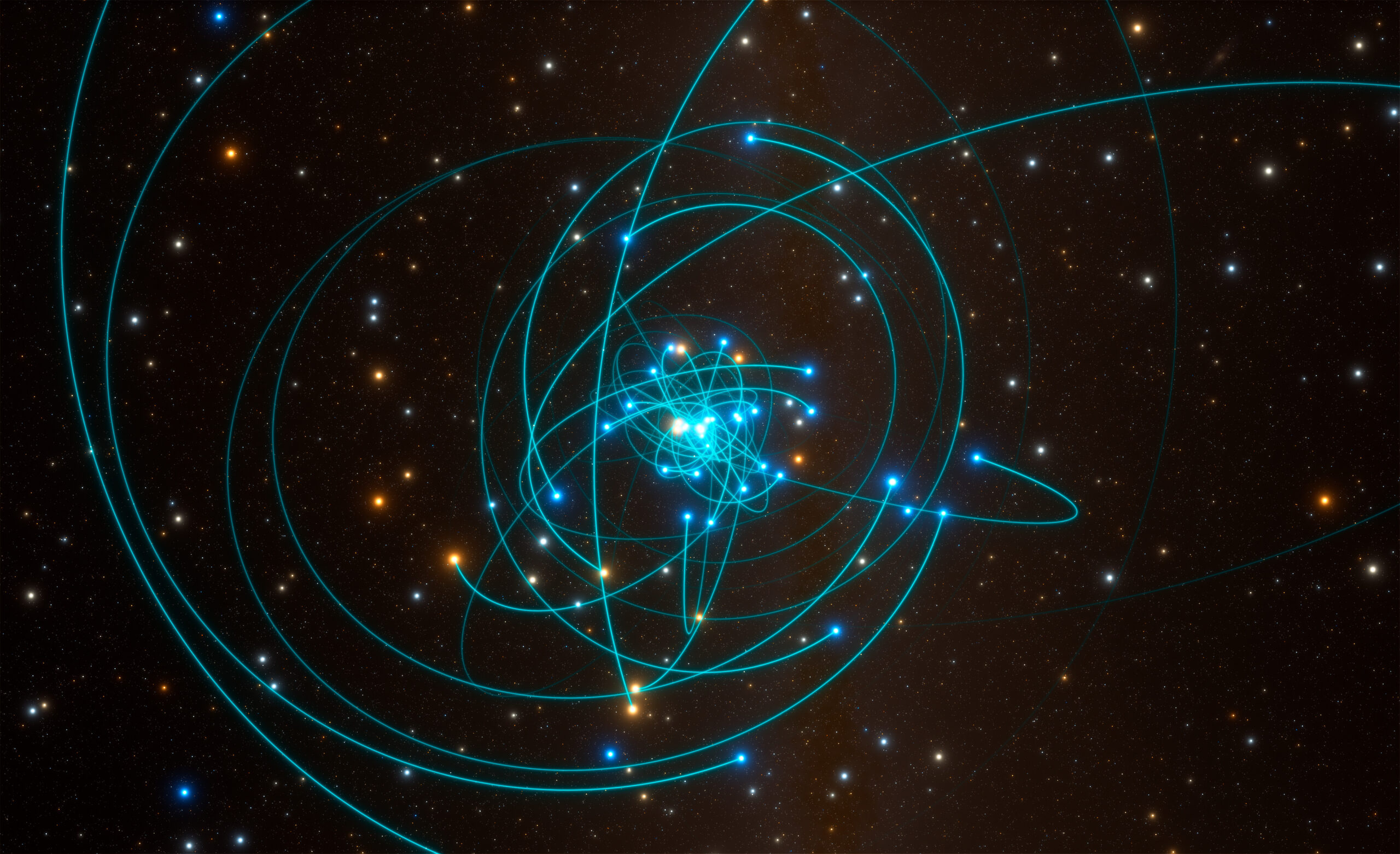
This simulation shows the orbits of stars very close to the supermassive black hole at the heart of the Milky Way. One of these stars, named S2, orbits every 16 years and is passing very close to the black hole in May 2018. This is a perfect laboratory to test gravitational physics and specifically Einstein's general theory of relativity. Research into S2's orbit was presented in a paper entitled “Detection of the Gravitational Redshift in the Orbit of the Star S2 near the Galactic Centre Massive Black Hole“, by the GRAVITY Collaboration, which appeared in the journal Astronomy & Astrophysics on 26 July 2018.
Share
Facebook Twitter LinkedIn Pinterest Email

Bad news, earthlings. Computer simulations of the solar system’s future reveal a new risk facing us all: The gravitational tug of a passing star could either cause another planet to smack into Earth or else fling our planet into the sun or far away from it, where any inhabitants would freeze.

Blame Mercury. Astronomers have long known that the innermost planet’s orbit, which is fairly oval-shaped, can become even more elliptical due to gravitational jiggles from Jupiter. Passing stars exacerbate this danger, Nathan Kaib, an astronomer at the Planetary Science Institute who is based in Iowa, and Sean Raymond, an astronomer at the University of Bordeaux in France, report in work submitted to arXiv

In agreement with previous work, their simulations show that once Mercury goes haywire, its orbit becomes so elliptical that the planet typically collides with either the sun or Venus. Then the resulting chaos can sometimes cause Venus or Mars to crash into Earth or Earth to crash into the sun. Or Venus and Mars can fling our world toward Jupiter, and the giant planet’s gravity ejects Earth from the solar system altogether.

Now the good news. “None of these things are probable,” Kaib says with a laugh. Over the next 5 billion years – most of the remaining lifespan of the sun – the chance of such a catastrophe afflicting Earth is only 0.2 percent, based on the number of stars passing near the solar system. Still, that’s a much greater risk than previous studies, which neglected the long-term influence of passing stars, had found.

“It’s a little scary how vulnerable we may be to planetary chaos,” says Renu Malhotra, a planetary scientist at the University of Arizona in Tucson who was not involved with the study. She thinks past stellar encounters have already influenced the solar system. In particular, they may explain why the giant planets have somewhat elliptical orbits rather than the nearly circular paths they should have inherited from the protoplanetary disk that gave them birth.

The most dangerous stars, Kaib says, are those that come nearest, less than 100 times as far from the sun as Earth is. Over the next 5 billion years, there’s about a 5 percent chance of such a close encounter. Also risky are stars that move slowly, at less than 10 kilometers per second relative to the sun, prolonging their gravitational tugs on the planets.

In the absence of passing stars, Kaib says, Pluto was thought to be safer than Earth, even though Pluto cuts across Neptune’s path while orbiting the sun. The secret to Pluto’s success? It’s in a 3:2 resonance with its giant neighbor, meaning Neptune orbits the sun three times for every two times that Pluto does. As a result, Pluto currently has no chance of hitting Neptune: Whenever Pluto is as close to the sun as Neptune is, the two worlds are always far apart. In fact, Pluto comes closer to Uranus than it ever does to Neptune.

“But once you allow stars to alter the solar system and push things around, you can actually knock Pluto out of its resonance with Neptune,” Kaib says. Then Pluto is in trouble. It can skirt by the giant planets and their gravity can kick it out of the solar system, or Pluto can smash into one of them. Over the next 5 billion years, the chance of such an ejection or collision befalling Pluto is about 4 percent. That’s 20 times greater than the risk facing Earth.

Previous ArticleInnovative Approaches to Training and Developing Home Sales Professionals
Next Article Trump Administration Cancels $766 Million Moderna Contract to Fight Pandemic Flu

Related Posts

The climate change report is out, and it’s sending a clear message: we have a real crisis on our hands.

September 18, 2025

Apex Space: The Spacecraft Startup That Just Became a Unicorn.

September 12, 2025

NASA thinks it is possible to have very basic life on Titan: Is Saturn’s Moon the Next Big Discovery?

September 1, 2025
Top Posts

From Father and Daughter to Racing Powerhouse: The Story of Tony and Maddy Sears

December 6, 2025

The Remarkable Journey of Artic Storm Cat: A Story of Heart, Heritage, and Unbreakable Spirit

December 6, 2025

Author Jeanne Bender embarks on a New Space Adventure for the next Lindie Lou book .

December 4, 2025

Katie Mischenko: The Heart and Soul Behind Katie’s Corgis (VKM Farmstead)

November 9, 2025

Ben Mallah: The Street Kid Who Built a $250 Million Real-Estate Empire

November 2, 2025

How a Model, Mother and Modern Storyteller is Redefining Success Through Purpose, Adventure and Authentic Living

November 1, 2025

Discover breaking news, trends, and expert insight every day. Politics, economics, entertainment, and more are covered live by USA Daily Hunt. Receive daily updates on the world's most significant happenings
We're social. Connect with us:

  • Sports
  • Athlete
  • Coach
  • Health
  • Beauty cosmetics
  • Fitness trainer
  • Doctor
  • Plastic surgeon
  • USA
  • World
  • Finance
  • Politics
  • Science
  • Business
  • CEO
  • Founder
  • Journalist
  • Realtor
  • Entrepreneur
© 2017-2025 USA Daily Hunt. All Rights Reserved.
  • USA
  • World
  • Finance
  • Politics
  • Science

Type above and press Enter to search. Press Esc to cancel.